

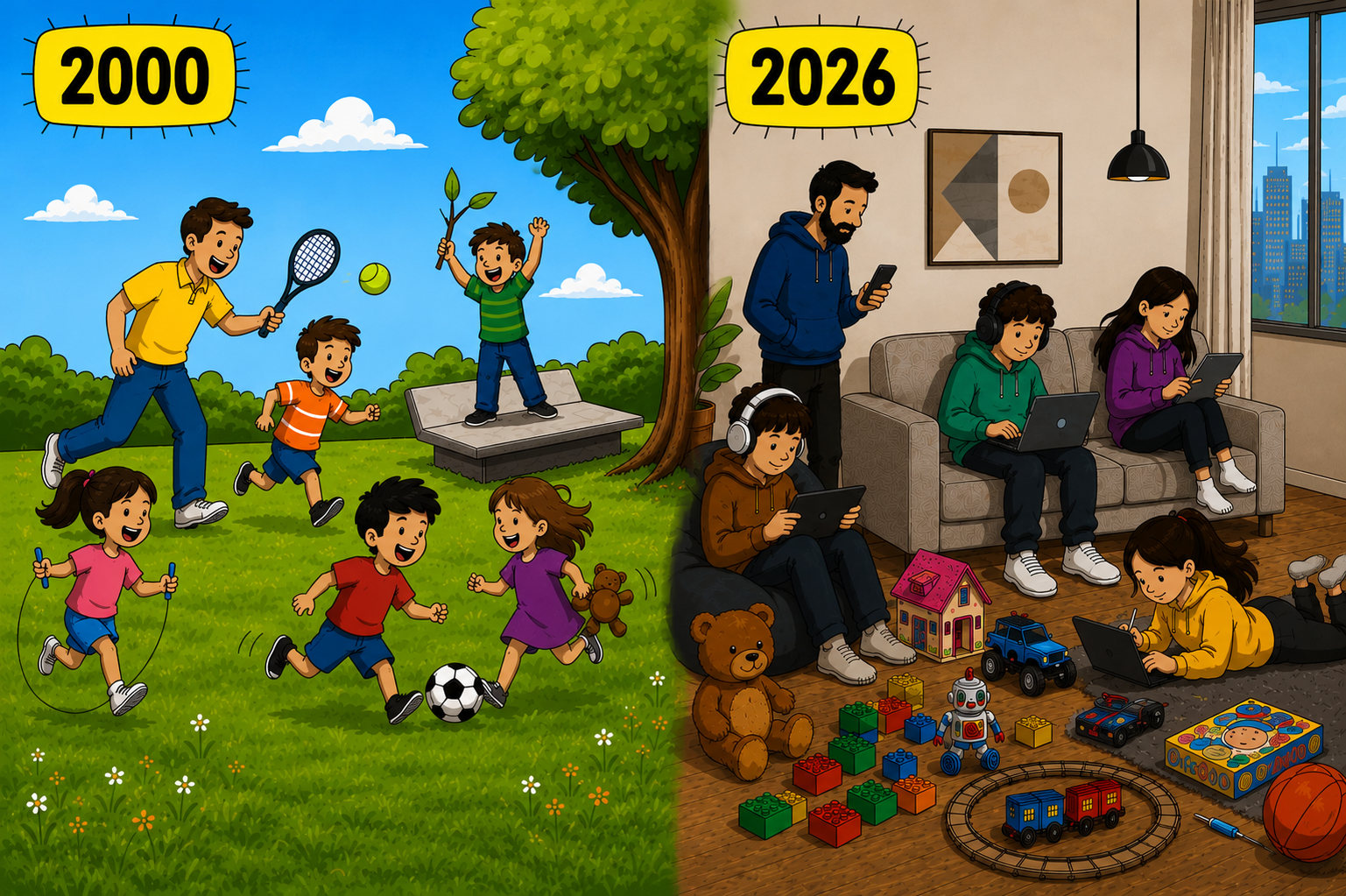
We remember when most of the fun happened outside the home.
Home was where the day ended. Kids came back to eat, finish homework, rest, and sleep so they could recover for the next day. The real activity was outside: school, sports, playgrounds, friends, lessons, and games.
Things have changed.
Today, so much of a child’s world can happen from one seat. Entertainment is on a screen. Food is delivered. Homework is online. Even classes and work are often called “remote,” although much of it happens right in front of us, at home.
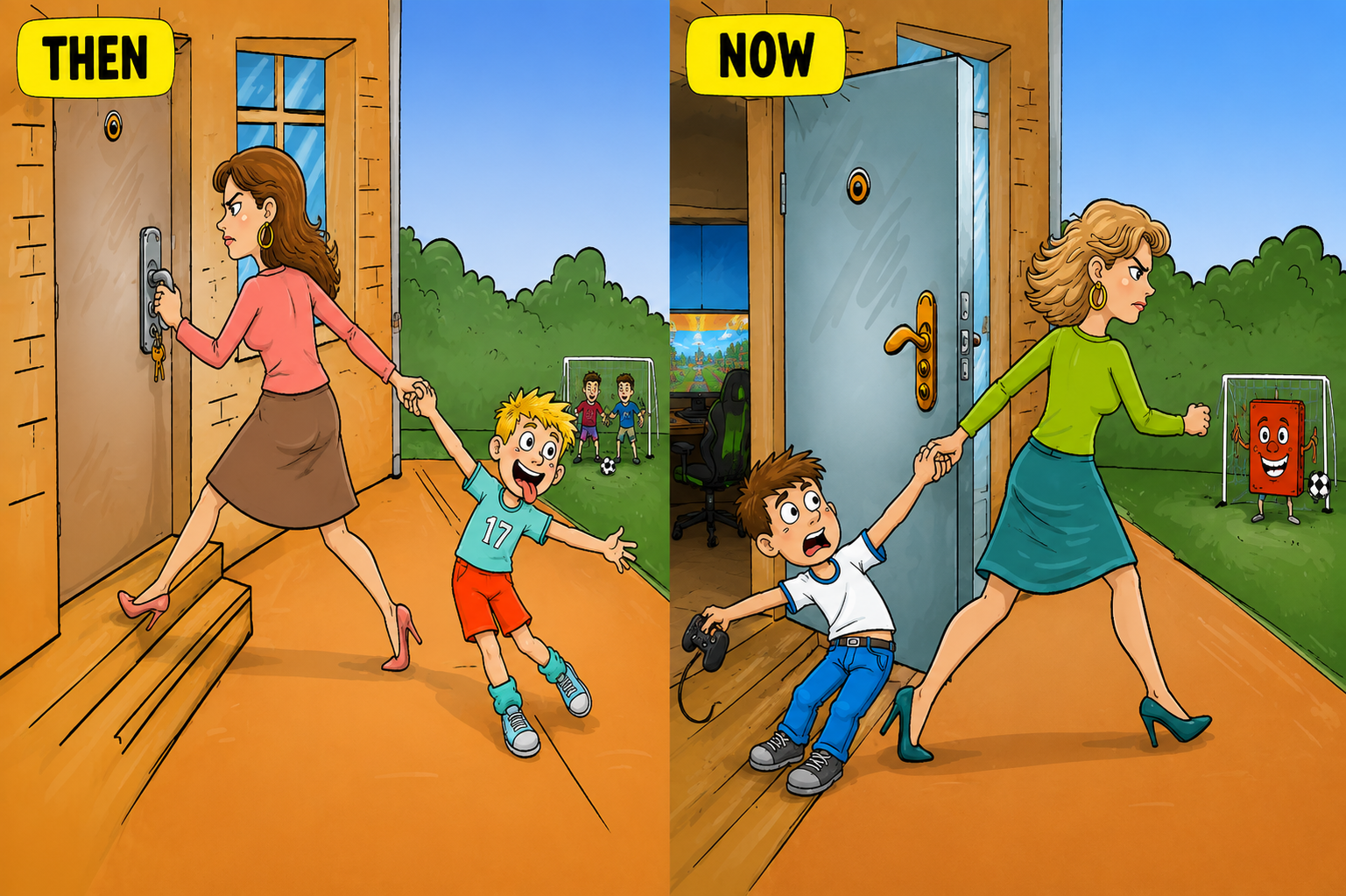
That convenience is not bad. But it does reduce the need to move, interact, socialize, and build physical habits.
Kids still need those things.
They need a reason to get up, go somewhere, meet other kids, follow a routine, and move their bodies. Just like school becomes a habit because children go consistently, active play also becomes easier when it becomes part of a routine.
That is where indoor activities can really help.
Outdoor play is great when the weather, safety, and schedule allow it. But as parents, we cannot always control those things. Rain, cold, heat, short winter days, and busy family schedules can interrupt even the best plans.
Indoor activity spaces help solve part of that problem. They give kids a reliable place to move, play, learn, and stay active throughout the year.
Why Indoor Active Play Matters
Kids are not built to sit still all day.
They need to run, climb, stretch, fall down, get back up, and try again. That is how they learn how their bodies work. As parents and coaches know, movement is not only about fitness. It also helps children build coordination, patience, confidence, and social skills.
Active indoor play can help kids improve balance, strength, flexibility, listening skills, teamwork, and communication. A child who climbs over an obstacle, learns how to stop and change direction, or tries a new game is doing more than just playing. They are learning how to handle small challenges.
That matters, especially for kids who spend long hours in school, in the car, or on screens.
Indoor Activities That Actually Keep Kids Moving
The best children’s indoor activities are the ones where kids do not feel like they are “exercising.” They just feel like they are playing.
Obstacle courses are a great example. Kids can crawl, jump, balance, climb, and move from one challenge to the next. These activities help with body control and coordination, but they also keep children interested because every step feels different.
Climbing and soft play areas are also helpful, especially for younger children. Climbing teaches kids to think before they move. Where should they put their foot? Can they reach the next step? Should they go around or over? These small decisions build confidence.
Sports-based games are another strong option. Simple tennis games, ball activities, relay races, and target challenges can teach movement without making things too serious. Kids practice running, stopping, throwing, catching, timing, and taking turns.
From a coaching perspective, this kind of play is valuable because children build athletic habits without pressure. They are learning footwork, balance, reaction, and coordination while having fun.
And for many kids, that is the best way to start.
Group Activities Help Kids Build Social Skills
Indoor activities are not only about burning energy. They also help kids learn how to be around other children.
In group games, children practice taking turns, following rules, sharing space, and working as a team. They learn how to win, lose, wait, listen, and try again.
This is especially helpful for shy children. A child may not walk up to another child and start a conversation right away. But if they are playing the same game or working toward the same goal, connection happens more naturally.
Parents often notice this after a few visits. Kids become more comfortable. They join in faster. They try new things. They start to see themselves as capable.
That confidence can carry into school, sports, and everyday life.
What Parents Should Look For
When choosing indoor activities for children, parents usually want more than just something to fill time.
They want a place that feels safe, clean, and supervised. They want staff or coaches who understand kids. They want activities that are fun without being chaotic.
A good indoor activity space should offer enough room to move, age-appropriate games, patient instruction, and a mix of structure and freedom. Kids should have fun, but they should also feel guided.
The atmosphere matters too. If a place is too strict, children may not be able to relax. If it is too unorganized, parents may not feel comfortable. The best indoor spaces have energy but also clear rules and caring adults nearby.
How to Encourage Active Play
Parents do not need to force kids into activities they dislike. That usually makes movement feel like a chore.
A better approach is to start with what the child already enjoys. If they like climbing, choose obstacle-based activities. If they like games, try group challenges. If they like sports, look for beginner-friendly programs where fun comes before competition.
Praise effort more than results. Let kids try at their own pace. Give shy children time to warm up. And when possible, make active play part of the weekly routine, not just something to do when the weather is bad.
When children enjoy moving, healthy habits become easier to build.
Final Thoughts
Children’s indoor activities are more than a backup plan for rainy days.
They help kids stay active, build confidence, improve coordination, make friends, and take a healthy break from screens. Whether it is tennis, obstacle courses, climbing, group games, or birthday activities, indoor play gives children something they really need: space to move and be kids.
For parents, that matters too.
Because sometimes the best activity is simple. Your child burns energy, learns something small, has fun, and leaves with a smile.
